Eco‑Focused Loading Dock Pressure Washing: Recycling & Sustainability
Creating an eco-friendly waste disposal area for loading dock pressure washing
Our approach to loading dock pressure washing focuses on delivering pristine, safe loading bays while minimising environmental impact. We design an eco-friendly waste disposal area adjacent to the loading bay that directs wash water to contained treatment systems, separates recyclables at source, and supports a sustainable rubbish gardening area where organic materials are transformed into compost. This is not just dock pressure washing — it’s holistic site stewardship with measurable environmental targets.
Local boroughs and waste separation: working within municipal systems
Many boroughs operate detailed schemes for waste separation — glass, paper, mixed recycling, food waste and green waste frequently collected separately. Our loading-bay pressure cleaning services align with these local policies, ensuring contaminants are segregated for the appropriate municipal transfer stations. By complying with borough-level sorting rules and utilising approved containment, we help reduce cross-contamination and increase diversion to recycling streams.We set a clear recycling percentage target for every site before work begins. Our standard objective is to divert at least 75% of recoverable material from landfill through reuse, recycling and composting pathways following a loading dock pressure cleaning operation. Targets are tailored to site conditions and local infrastructure, and documented in an environmental action plan that details separation protocols for cardboard, timber pallets, metal, plastics, and organic residues.
![A mature woman wearing a straw hat, grey T-shirt, and gardening gloves is kneeling on a lush green lawn in a well-maintained backyard. She is holding a pot with blooming purple and pink flowers, which she appears to have recently transplanted or prepared for planting. Behind her, there is a black garden wheelbarrow with yellow handles, filled with soil or compost, indicating ongoing garden activity, and nearby, a silver watering can is placed on the grass. The background features a variety of mature trees and hedges, with dense, leafy green foliage that provides natural shade, suggesting a peaceful outdoor environment suitable for gardening and landscaping services. The scene is brightly lit by natural daylight on a clear day, emphasizing the vibrant colors of the flowers, the varied textures of the grass, and the healthy appearance of the plants. This outdoor space reflects a well-organized, landscaped backyard typical of residential gardens in the [POSTCODE] area, demonstrating a focus on gardening and outdoor maintenance, with a natural connection to local landscaping expertise provided by companies like Loading dock pressure washing.](/pub/_photos/gardening/f1757731408.jpg) Each project lists local transfer stations and recycling hubs that receive specific streams. We routinely use borough transfer stations and regional materials recovery facilities for recyclables, and civic composting centres for green waste and food-soiled materials. Typical activity around a dock pressure wash may include:
Each project lists local transfer stations and recycling hubs that receive specific streams. We routinely use borough transfer stations and regional materials recovery facilities for recyclables, and civic composting centres for green waste and food-soiled materials. Typical activity around a dock pressure wash may include:
- Cardboard and paper baled and sent to paper recycling facilities;
- Plastic and film sorted and routed to polymer recyclers where available;
- Wood and pallets assessed for reuse, donation, or chipped for biomass or mulch in a sustainable rubbish gardening area;
- Metal and fixtures reclaimed and delivered to local scrap metal processors;
- Wash water captured and treated on-site, with solids separated and disposed of or recycled appropriately.
We maintain active partnerships with charities and social enterprises to maximise reuse. Usable pallets, crates and undamaged shipping containers are offered to local charities and community projects, supporting reuse rather than recycling. These relationships keep materials in productive circulation and support community horticulture initiatives that create soil enhancers for sustainable gardening schemes near warehouses and distribution centres.
Fleet choices matter: our commitment includes the deployment of low-carbon vans and vehicles for loading bay pressure cleaning logistics. We operate electric and hybrid vans where feasible, and low-emission Euro 6 diesel alternatives on longer routes, combined with route optimisation software to reduce mileage. This reduces our operational emissions while maintaining timely transfer of recyclables and materials to local transfer stations.
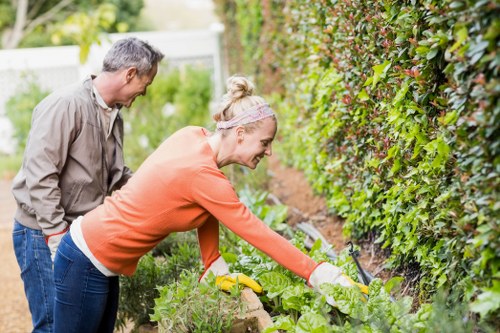 A sustainable rubbish gardening area is a practical extension of our site work. Organic material collected during dock maintenance or from adjacent landscaping is composted on-site or at partnered community compost hubs. The compost is used to enrich soil in planting beds around industrial estates or donated to community gardens supported by our charity partners. This practice turns waste from loading dock maintenance into a resource, closing the loop between cleaning activities and urban green space regeneration.
 Operationally, we enforce strict segregation at the point of collection during any loading bay pressure washing. Staff are trained to identify recyclable streams in accordance with borough guidance, and our containment systems prevent runoff and cross-contamination. We use biodegradable, phosphate‑free detergents and low-pressure rinse options where appropriate to protect local waterways and reduce chemical loading in captured wash water.
To ensure transparency and continuous improvement, we monitor diversion rates and report progress against the recycling percentage target. Quarterly reviews with site managers compare actual outcomes — such as tonnes of cardboard, wood reuse cases, metal reclamation and compost produced — against the 75% diversion baseline, with corrective actions set where needed.
Community engagement is integral: our charity partnerships include donation of reusable materials, support for local horticulture projects, and skills exchanges that help community groups manage composting and small-scale recycling. These collaborations amplify benefits beyond the site, contributing to borough-level sustainability goals and helping reduce municipal disposal costs.
In summary, whether described as loading dock pressure washing, loading-bay pressure cleaning, or dock pressure washing services, our model is built on eco-friendly waste disposal areas, integrated recycling targets, strategic use of local transfer stations, charity partnerships and a low-carbon van fleet. These elements together deliver cleaner loading areas, improved recycling performance, and tangible benefits for urban gardening and green space projects—turning routine maintenance into an opportunity for sustainable resource recovery.